Friday, 6 January, 1989
Oostende to Dover to London to Oxford
The day dawned clear, bright, and beautiful. And me, not only was I up and ready in time to catch the ferry, I had time to take pictures of the ferry port with its new and old buildings, its piers, and its ships while I waited for my boat to come in.
We were underway around 8:00 AM. We cleared the harbor bars and set out into the Strait of Dover, which today was blue and calm, with an equally blue sky overhead. I spent most all of the time up on deck, watching the sunlight sparkling on the little waves and the occasional other craft that sailed past at a distance.
As we approached Albion’s yet-unseen shore, I came to understand that something has happened to me on this European trip, though maybe it started to happen when I came to Oxford last October: I was homesick for England.
Not just for Oxford or Coverdale* or Nigel* or the other people there. For England.
After awhile a horizontal strip of white began to sunder the medium blue of the sea and the pale blue of the sky . . .
Dover. It was the White Cliffs of Dover. Oh, God! It was England there on the horizon, with every nautical mile travelled growing grander and higher and more and more clear and substantial to my hungry, staring eyes. But not fast enough, not soon enough. I took in those cliffs, that shore, and I couldn’t help it-- I wept with homesickness and joy. It was England, it was home, I was coming home!
I wept, and I didn’t care. When we landed and disembarked at the Dover ferry port, I would have precipitously knelt down and kissed the tarmac, I was so glad to be back on British soil. But I was in a herd of other travellers being ushered towards the Customs station, and it would have been hard to explain my behaviour if a fellow-passenger had hurt himself tripping over me. Especially hard, considering I’m an American.
Thankfully, I had the presence of mind to get through Customs without making a fool of myself, and onto the train for London.
The train from Dover stops at Charing Cross. When I got there I discovered I’d made a false assumption: No, you can’t get a train to Oxford from there. You have to go to Paddington Station, by Underground. Okay! Got myself and my lugguge down to the Tube, and I was happy at least to note that compared to how hard it was to carry it all when I first set out a month ago, now I’m much stronger and able to manage it well, even with all the guidebooks and souvenirs I bought.
My sanguinity about this was demolished, however, when I got to Paddington Station. When I got off the Tube I had ten minutes or less to make the train for Oxford. But just as I was heading for the escalator up to the platforms, one of the straps on my canvas Boy Scout backpack broke! No way I could carry another piece in my hands, so I slung it over my shoulder by the other strap and kept running, with the bag full of books and maps bang, bang, banging away at my poor back.
Aaaghh! I hope I can find a place in Oxford to fix it! I’ve depended on that backpack since I bought it in April of 1972!
By dint of total exhaustion I managed to catch the Oxford train. Not a direct route, of course. Stops in Reading. But we got to Oxford uneventfully and in good time, and I boarded a City bus for the final leg of my journey to Coverdale College* and home.
When the bus stopped on Cornmarket, I noticed something, something linked to how I felt earlier today approaching Dover. It was dark, but I could still see the Oxford women young and old waiting there on the pavement to get on. I could see how badly they were dressed, how frowsily and dumpily they arrayed themselves, especially compared with the Frenchwomen I’d seen, urban or provincial.
And I was ashamed. I took it personally. My initial thought was, "Oh, gosh, don’t we dress horribly!" I identified with those woman, dowdy as they were. They were my townswomen, my countrywomen, even, and I wished we could all do better.
But there it is: "We." Damn, I am getting tied up in this place . . .
Friday, July 31, 2009
My Cut-Rate Grand Tour, Day Thirty-two
Saturday, February 21, 2009
My Cut-Rate Grand Tour: Day Fifteen
Tuesday, 20 December, 1988
Paris to Reims to Paris to Dijon
PARIS-- Was supposed to get the 8:30 for Reims from the Gare d’Est this morning. But due to not figuring in Paris rush hour on the Métro and having to figure out a strange railway station, I just missed it. First time I’ve missed a train so far. Funny, as I discovered later, I might’ve made it if I’d remembered to look for the train on the board for "Grands Lignes" instead of trying to find it on the one for "Banlieu." The difficulty was that there was an 8:30 to the suburbs, too.
Nothing to do at that point but use the time I had. So I reserved a place on the TGV for Dijon tonight.
Then I boarded the Métro and almost went out to see the abbey church of St. Denis. But the word was that the Métro there was running at 50% only and I had two more transfers to make. And if I was going to Reims today I needed to make the 11:05 train and it was heading towards 10:00 as it was.
So I stayed on the subway to the Invalides stop and walked over in the Paris sunshine to the chapel of St. Louis des Invalides.
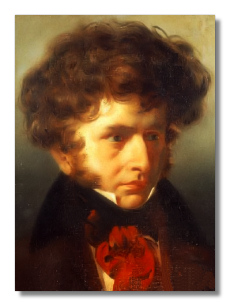
This church witnessed the first performance of my Requiem. They were about to hold a funeral service so I couldn’t linger, but it was good to see the place and wonder exactly where Berlioz had placed his four brass choirs.
I could see the Eiffel Tower’s top over some buildings near there. Closest I’ll get this trip . . .
Shocking, isn’t it? But this trip to Paris has primarily been a Berlioz pilgrimage for me. And even though I couldn’t find the Conservatoire day before yesterday and didn’t get the chance to visit his old street in Montmartre to see where he lived or go and "eat bread and salt on the Pont Neuf" as he did in his poor student days, I found he was more present here than he was in La Côte St. Andre. It’s given me real perspective on why I felt so empty about things there.
Paris was the city he flew to, to do and dare and struggle and use the talent God had given him. Even when Paris put him down and refused to rightly estimate his brilliance and talent, it was still the crucible where his musical skill was refined, the fertile field where his mind was sown with the strong seed of Gluck and Spontini and Beethoven and von Weber, the arena where he fought his battles for his music and for the music of the great ones who rose with him.
Whereas La Côte was the place he had to escape from, the place he feared being stifled by.
You know what it reminds me of? La Côte, I mean? Especially seeing the substantial, upper middle class house where Hector was raised, it reminds me of Mission Hills, with all those respectable and prosperous doctors and lawyers and stockbrokers, all proudly expecting their firstborn sons to grow up and become doctors and lawyers and stockbrokers just like them. That’s what Dr. Berlioz wanted Hector to do. He wasn’t a hick country practitioner. Dr. Louis Berlioz was a scholar and a scientist of note. He published esteemed medical papers and had a name among his colleagues. He always thought his eldest would follow in his footsteps, that playing the flute and scribbling music for local string and wind ensembles as Hector did was just a civilized pastime for after hours. For his son to throw over medical school and tell his parents to hell with it, he was going to the Conservatory of Music and become an opera composer, was like a kid from Mission Hills informing his folks he was abandoning Harvard to play in a rock and roll band.
There was so much inertia pulling Hector to accede to his father’s wishes! It was always expected that he'd get his medical degree and return to La Côte and join the family practice and become as respectable and prosperous as his father. It went without saying that he'd inherit that fine house and live out the rest of his days as the esteemed physician of the Isere region! The only thing that could break that inertia was the musical fire within him and his conviction that he had to let it blaze forth and Paris was the only place he could begin to do that.
And that is why I couldn’t find or feel mon cher Hector in La Côte St. Andre. He wasn’t there. He left. He came to Paris and got away.
REIMS-- Made the 11:05. Contrarily, the weather clouded up again as the train travelled east. Of course.
The sculpture on both the west front and the north transept portals of the Cathedral of Notre-Dame de Reims was being restored. Scaffolding everywhere. So for this one I spent the most time circling the flanks and the chevet. I do like the angels up in the buttress piers. And of course anyone who’s anybody is featured up on the west front.
They don’t have much of the medieval glass left at Reims. What they do have is the axial chapel windows by Marc Chagall (interesting place for a nice Jewish boy) and some very harmonious but quirky windows by Jacques Simon. The latter included one dedicated to the making of champagne.
It’s a pity so much of the cathedral sculpture has been destroyed. It’s very effective the way it continues around to the screen on the interior of the west wall. One of my favorite scenes there was of Abraham offering a tithe of the spoils to the priest-king Melchizedek after the battle of Sodom. Abraham is dressed in full chain mail like a medieval knight!
It looked as if the weather might-- just might-- break enough for me to get some sunlight on the west front sculpture this afternoon. So I decided to go get something to eat while I waited for it to do it. As I wandered through the streets of the town, I found a shop that actually had little busts of mon cher Hector, in alabaster on a marble base. The one on display had the sculpture and the base a little out of kilter . . . In a good cause I can be pretty bold, so I asked the clerk in my best fractured French if they had any more to choose from. He got a ladder and reached down a couple more from high off the shelf above. Examined them . . . ah, yes, one of these was definitely better.
This set me back 72F but I’ve done so little souvenir acquiring so far (books don’t count). Had the store pack it in a box so it won’t get hurt in transit.
The skies did clear up so I returned to the cathedral and took some more photos of the statuary, with the west front all golden. It was a fun getting angles where the scaffolding was least in the way. Thanks to the telephoto lens on the Olympus I think I was able to get some good shots of the kings on the archivolts. Then I popped back inside and admired the sunlight streaming through the medieval glass, especially the west end rose window. What a blessing the sunlight can be!
I thought I’d read that the tomb of Hughes Libergier, a medieval architect, was in Reims Cathedral. But I couldn’t find it. And I didn’t ask the man at the bookstall. This is dumb, because on the train back to Paris I read in the guidebook I bought that it is there somewhere . . . and now it’s too late to see it.
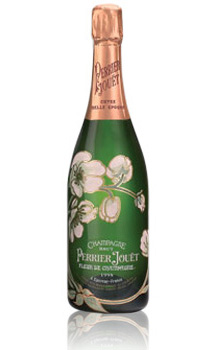
Before I left Reims, since I was in one of the major cities of the genuine Champagne region, I decided to do something gracious for a change. I bought a bottle of champagne for a hostess gift for Lukas’s* family. I think I can carry that bit more . . . Have no idea if the vintner is any good. It’s just what they had on Christmas special at the Monoprix. Really wanted one of those pretty Art Nouveau bottles from Perrier but at upwards of 220F there was no way.
PARIS AGAIN-- After the return from Reims got off the subway at the Bastille stop to admire Duc’s column and see the place where the Funeral and Triumphal Symphony was first performed. There were a lot of other places here I wished I had time to see but there was no way-- I had to find something to eat and pick up my bags from the hotel and make that train for Dijon.
Around that area, though, I found something else I was interested in-- one of the famous Art Nouveau Métro stops, by another Hector, M. Guimard. Glad I caught that.
DIJON, THE HÔTEL MONGE-- Not a good time getting here. First of all, I cut it a little short on time in Paris. Second, with the bust and the bottle and the books and all, and with me being in general fatigued, the bags were miserably heavy to carry. And then the lady at the hotel, who’s known nothing about it so far, so why did I take her advice now? told me (in English, since she had no patience with my French), oh, the slowdown strike is still on, don’t take the Métro, take the #63 bus to the gare de Lyon.
So instead of schlepping one and a half blocks to the Métro stop I lugged everything, feeling like the Ride to the Abyss, four long blocks to the corner where, according to the concierge’s sage advice, I could get the right bus. But when sweating and panting I arrived there, I found that no one on that corner had any idea where any such #63 bus stopped.
So I took the Métro anyway. And yes, it was a bit slow, not being full service, but at least I did get to the station and onto the train with ten or so minutes to spare.
I feel like I spent most of the short time on the TGV catching my breath. I pulled into Dijon, feeling about half-past dead. Blessedly, a man, a fellow-passenger from the train, carried my blue and heavy bag for me from the platform to the outside of the station.
Well, it seemed that since I had to use my Visa, being short of cash, and not liking to check into hotels sight unseen anymore, I thought I could just walk into town and check a couple of possibilities. The distance didn’t seem far on the Michelin Guide map.
It was excruciatingly far. It was 10:00 PM and Dijon isn’t as well populated at night as Paris or Toulouse. The streets were dark and empty and I thought, wonderful, someone could come right now and bang me over the head and steal me blind. But I was so close to the end of my rope, only able to stagger a few more steps before I had to set the bag down and rest, that I didn’t care. I couldn’t hurt worse than I already did. I almost wished someone would come along and run off with my luggage. I’d be free of it then.
Fortunately, one of the Let’s Go hotels , the Hôtel Monge, did take Visa. And they did have a room. And it’s actually not decorated too badly. Usual chenille bedspread but the wall paper is good. And it overlooks a charming courtyard and has a view of the steeples of two churches.
Also has a view of the apartment opposite, whose occupants were engaging in something I’m sure was its own absorbing reason for their forgetting to pull the shades or extinguish the lights. That’s all right, we’ll assume they’re married and leave our own curtains closed. MYOB.
Posted by
St. Blogwen
at
6:26 PM
0
comments
Labels: Berlioz, cathedral, delight, Dijon, Europe, exhaustion, France, friendly strangers, hotel, La Cote St Andre, luggage, music, Paris, photography, Reims, subways, trains, travel, weather
Friday, January 16, 2009
My Cut-Rate Grand Tour: Day Six
Sunday, 11 December, 1988
La Côte St. André
HÔTEL FRANCE-- Hector’s birthday dawned cloudy and gray, which has become typical . . . The sun peeked out only once: oddly, when I was reading in the Mémoires about what a sunny spring day it was when he had his first Communion.
That was after church, when I was waiting for the hotel dining room to open for Sunday dinner.
The salle à manger was filled with jolly family parties this afternoon. Interestingly, at a nearby table there was a young man who had a look of la famille Berlioz about him, especially about the nose and mouth and in his abundant mop of curling light brown hair. But he lacked Hector’s poetry and gravity of countenance. I wonder if there are collateral lines extant around here . . .
I also noticed what I think was the cause of that squeaking noise I heard last night. They have a set of Western-salon swinging louvre doors between the kitchen and dining room, and they give out a creech every time a waiter or waitress passes through.
I shall say something about dinner, since I can’t afford many such, at 125F plus wine. It began with an amuse-guele in an egg cup. Layered, with aspic glaze. First bit tasted of chicken stock then as you ate lower with the tiny spoon there was a kind of vegetable puree mixed in. Carrot and tomato, I think.
Then came a nice bit of pâté chaud en croûte.
The fish course was a cold lobster pâté with a dollop of creme dressing with chives. The slice of pâté was very prettily decorated with chives and red and black caviar. On the side was a decorative lattice of haricots verts with tiny carrot balls inside the squares. A garnish more than anything, but it was cute. This was all quite delicious.
The only real disappointment was the main course. It was bits of duck that came drowned in a brown sauce, served in a copper skillet. The meat was rather overdone and the sauce reminded me too much of the omnipresent stuff the cooks at Coverdale* make from a mix. There were scalloped potatoes on the side and they did come off, however.
I’d pretty well eaten myself into a coma by then but still sampled four kinds of fromage off the cheese board.
And then there were little bonbon affairs and then the dessert I chose, a passion fruit mousse. Thought that was appropriate for celebrating Hector’s birthday . . .
Couldn’t finish any of these, and the waitress asked if I wanted to take it with me. With my bad French I gave her the impression I didn’t and as ungodly stuffed as I was I didn’t make any effort to correct that. Rather wish I had, now.
Chose a white Savoie for the wine. Fine with the lobster pâté but I think a red would have worked better with the duck.
I’m afraid I let my gourmandizing laissez-faire run away with me, however. I know the French take their eating seriously, especially Sunday dinner, and I can spend three hours over a multi-course meal with the best of them, which this afternoon I did. However, my sitting there patiently between courses letting the waiting folk assume I had nothing to do here in La Côte except pack in their cooking really reamed me for time. I barely was able to see the Musée Berlioz and then get back to the church for the concert. And I was late at that, making it for only the last two Faurés. They were the pieces I wanted to hear, but still I had no time to wander around the town and take pictures, at all. And the bus leaves at 9:13 AM tomorrow, which in this land of eternal daylight savings time means it will be just barely light.
As Mr. Chenley† said in his letter, the director of the Musée was most friendly and courteous. He even came downstairs (after I had explained that I was a member of the London Berlioz Society) to where I was looking at the chronology to give me a keyring and medal made for the 1969 centenary of Hector’s death.
What he did not give me was his name, nor I mine. For that matter, I am not even signed in here at the hotel. Madame says last night, oh, it can wait till morning. Very nice and trusting, but I don’t really care for the idea that if I croaked up here this evening they’d only know who I was by rummaging through my baggage.
Anyway, at the Musée it’s hard to tell what room is what, as there’s no way of knowing if the furniture is arranged as it was in Berlioz’s time or if it was just put in to look pretty.‡ I did ask which one was where Dr. Berlioz taught his son Latin. It’s the room opposite the kitchen.
There’s a chair in there that was Hector’s. Forgive me, mon bien-aime, but I’m afraid I was so far within myself that it was only my intellect that moved itself to realize, "He actually sat there."
It’s a charming house, however. Very nice marble fireplaces. And a stone sink in the kitchen. And plaster walls with painted designs.
The music isn’t piped anywhere but into the reception room, to the left of the entry, but you can hear it dimly upstairs. Bits of Harold, the Hamlet Funeral March, the Waverly and Le Corsair overtures . . . Nothing vocal or they might’ve gotten something live.
I had Volume I of my 1878 edition of the Mémoires with me, and showed it to the people on the desk. I didn’t understand all their comments but I gathered it was a reasonably good find.
They gave me a copy of the Bulletin of the French Society. And I bought a monograph on Hector’s childhood and adolescence (plus a few postcards). Tout en française, à bien sûr, meaning I’m in for the long haul with this language . . . but I would dearly love to have a companion with me to whom I could speak English and who could maybe supplement my French . . .
Got back to the hotel (where I dropped off my camera) then over to the church just before they were to do the Cantique de Jean Racine. The director of the Musée was there and very kindly made sure I got in on a student ticket and found me a seat closer to the front. The choir, who I think are called "À Coeur Joie," and the orchestra, the Orchestre de Chambre du Dauphine, did a positively luminous job on the prayer. The Fauré Requiem was lovely, too, but the men were just a tad harsh in places and the baritone soloist was choppy in his phrasing. Still, they did lots better than we did in Hector’s Te Deum last Saturday. And the audience liked it. Set up a rhythmic clapping afterwards . . . but there were to be no encores ce soir.
The acoustics in the eglise St.-André are pretty good. Apparently the nave used to have a wooden roof but it’s rough plaster now. The aisles are ribbed groin vaulted. The nave piers are great fat round Romanesque ones but the arches are all pointed. The architecture is in general rather klutzy and uncoordinated (nothing aligns or matches), but it’s solid and substantial nonetheless.
In spite of or because of what I experienced this afternoon and evening, I’m afraid I feel a bit depressed. The weather has a lot to do with it and so does the language. I can get my physical needs met in it but none of my emotional ones. I hope I pop out of this before the 23rd or else I’m going to make a pest of myself when I see Lukas*. He’s liable to get a hug whether he wants one or not.
Perhaps I would feel differently if I’d been more inspired by what I’ve seen today. But perhaps the voice and presence of men of vision speak more loudly in their works than in the sites and artifacts that knew them in their physical presence. Meaning I wasn’t as moved as I’d expected to be seeing the house where Berlioz grew up and learned Virgil and the first elements of music.
But I just had a rather alarming thought. Over the last fourteen and a half years since I learned and sang the Requiem, Hector's music has become internalized for me. It's become part of my personality as much as of his, and to a degree that’s also happened with the places and things he described in the Mémoires. So when I see them in person and their reality doesn’t fit the concept I had of them in my head, they seem somewhat irrelevant. Worse, they seem to take this person to whom my soul feels so close and remove him from me, to make him a stranger like all the strangers here.
Fortunately, I brought the music along. Oh God, let it not abandon me!
I think I should take advantage of the bathtub again this evening. Heaven knows when I shall have another chance . . .
A silly note here. My missing glove you know about. But here’s the further tally of items lost so far: My luggage keys and their neck chain, pulled off somewhere between Caen and Chartres (nothing was locked, fortunately). My Youth Hostel pass which I left at the desk at Chartres (they’re supposed to be sending it to the PO at Toulouse, poste restante). And I appear to have left my slip at the Auberge in Chartres as well. Now this is really too bad. It was good enough for me to wear but with its shot elastic and safety pins, it’s really no good to anyone else. I shall have to buy another, too. Pestiferous.
I can't hear that squeaky door below me tonight, so I guess the restaurant isn't open Sunday evenings. That's a blessing, at least.
__________________________
†The then-secretary of the London Berlioz Society
‡The Musée was renovated in 2002-03 for the Berlioz birth bicentennial, so this state of affairs may well have changed.
Posted by
St. Blogwen
at
7:57 PM
0
comments
Labels: Berlioz, books, churches, clothes, depression, Europe, food, France, French language, friendly strangers, hotel, local culture, luggage, museum, music, travel, weather
Tuesday, December 30, 2008
My Cut-Rate Grand Tour: Day Three
Thursday, 8 December, 1988
Chartres
I know it sounds like blasphemy†, but the cathedral was rather a disappointment.
It was a very gray, heavily overcast day today, and the church was so dark you could see almost nothing. The vaults were lost in the gloom and the windows badly needed cleaning. I kept praying the sky would clear up but that wasn’t in the divine plan.
I could see the importance of light in bringing about the proper effect here. Mont-St.-Michel was a religious experience. Here I had to play art historian and approach the cathedral intellectually. Not the best way.
Shot the south and north portals using the flash. Wouldn’t dream of using it inside. I did photograph some of the windows inside. We’ll see how they come out.
There was a plan with all the windows keyed on it posted at the west end. I found the one of the life of St. Nigel‡ and headed for that apse chapel. Not a particularly popular saint: it was quite dark, partly because the window was opaque with grime. N’importe. There were people-- or a person-- who deserved to be prayed for there and so it came to pass.
Chartres is definitely an urban cathedral. It’s in use daily by the townspeople who employ its nave and transepts as thoroughfares and as places to greet and gather. They treat it, it appears, familiarly if respectfully (most of the time). But oy, it needs cleaning! That familiarity is verging on neglect.
I’m afraid I didn’t throw all that much into the restoration coffer myself. The francs go awfully fast.
I greatly enjoyed going up the stairs and along the buttresses to climb the north tower. You can see all over Chartres from there and in the tower see the great bells and the late Gothic stonework details.
I think the cathedral looked best today early in the evening. And when I came by at 6:30 to bid it farewell before heading back to the Auberge de Jeunesse the bells began to ring. That was grand.
Bought Malcolm Miller’s official guide in the cathedral bookstore, along with various cartes postales. Blew 350F (£35 +/-; $70 +/-) on a book on the stained glass at a bookstore across the street. The things I’ll do to write decent essays!
There was a little problem at lunch, my first meal of the day, when I was so tired and hungry I couldn’t decide what I wanted at the restaurant. Problem really was, the only thing I could afford was an omelet-- again. This one was cooked through. The real problem came when I found I’ve been confusing five-centime pieces with five-franc ones. I went to pay and found I was 5F short. Fortunately, they didn’t call the gendarmerie to run me in. No, I was allowed to go across to the Credit Lyonnaise, cash some traveller’s cheques, and bring back the balance.
(Something interesting I noticed in the restaurant: People had their dogs in there with them, no problem, and the sign posted on the subject only asked that patrons not allow them up on the chairs!)
As far as emotional satisfaction goes, I think I liked the town better than the cathedral. The streets of Chartres are a great deal of fun. I wouldn’t mind spending several days there just exploring. They teem with interesting shops, most of them too expensive for me (will the French really pay around $60 or $70 for a little nine-color watercolor paint set?), and a myriad of boulangeries, patisseries, and confiseries. It was very lively and colorful, especially after dark with the windows lit up with a golden glow and the Christmas decorations festooning from facade to facade overhead. There were all sorts of people out and it was pleasant just to wander around with them.
It’d be even more pleasant to do it with less to carry. That camera bag is good for the long haul but during the days, walking around, it’s a pain. The new document case bag is better as of today, though. Not that the clasp is fixed, but I was directed to a place where they put some new holes in the strap. It hangs about five inches shorter now and is much more comfortable. No longer banging against my thigh.
I have discovered that useful as that satchel is (and how much in vogue here), it’s heavy even unloaded. Not a lot to be done about it.
At about 5:45, I had a cup of chocolate at a shop across from the north flank of the cathedral. Wrote postcards. Funny, I don’t realize how damn tired I am until I sit down. Then I absolutely vibrate. Being hungry and exhausted does nothing for my French, either. I don’t speak such hot English in such states, but the people around here don’t know that.
Otherwise, my French is adequate. Or at least good enough to make people think I speak it and so go right over my head.
Second night at the Auberge de Jeunesse. It’s a nice place, in a modern way. Reminds me of something a young, bright architectural firm would do. It is rather annoying, though, for the management to be so pointed about the low-budget basis of the place. I mean, at least they could put waste bins in the rooms. Even people travelling on the cheap generate trash.
I didn’t really expect them to provide towels, and they didn’t. I would love to travel light, she said, but it’s hard when you have to carry your own linens with you.
I almost think that if I get tireder and not stronger, I may blow the money to send a few things back, sacrificing one kind of comfort for another; that is, sacrifice comfort in place to comfort in motion. Like, I’m beginning to think I could do without my jeans. They’re not really right for the kinds of places I’m visiting. And the hairdryer won’t work in the outlets here, even with the adaptor.
___________________
†I'd studied the cathedral of Notre-Dame-de-Chartres at KU under the great Prof. Lou Michel, and had conceived the sentiment, "See Chartres and die!"
‡Yes, I know there is no "St. Nigel"; at least, I doubt any such is commemorated in any French cathedral. Never mind, you get the point!
Posted by
St. Blogwen
at
1:31 PM
2
comments
Labels: architecture, books, cathedral, Chartres, delight, disappointment, Europe, exhaustion, food, France, French language, friends, historic towns, hostel, local culture, luggage, photography, travel
Monday, December 22, 2008
My Cut-Rate Grand Tour: Day Two
Wednesday, 7 December, 1988
Caen to Mont-St.-Michel to Chartres
ON THE TRAIN-- Unbelievable, but I actually made it onto the 6:48 AM train to Pontorson (final destination, Rennes). No line at the guichet at this hour so it didn’t take any time at all to get my EurailPass validated. The guidebooks all tell you to write on a piece of paper what you think the correct usage limitation dates are, but I couldn’t find anything to tell me exactly how long a one-month pass is to go, thirty or thirty-one days. So I went for broke and put down the 7th of January as the end date, and ticket agent accepted it and wrote it in. Hope to gracious that’s acceptable. Some of the literature said something about a special stamp . . . but maybe that’s just the validation seal.
7:05 AM-- M. le Conducteur was just in. He didn’t even look that closely at the thing.
There was an older couple in the car when I got on. I'd looked around and discovered the only place to put my luggage was on the overhead rack. When it came the turn of the heavy blue suitcase, I grabbed hold and tried hoisting it over my head. Impossible. I simply could not manage it. But the gentleman saw my plight and came to the rescue. As he deposited my bag on the rack, he and his wife gave me greeting, in French.
Um, I know what they just said-- the polite response is, um, um . . .
And the gentleman said, "Mademoiselle ne pas française."
"Oui, Monsieur."
"Vous êtes l'anglaise?"
"Non."
"Hollandaise?"
"Non, Monsieur. Je suis une Americaine."
Funny! But I guess I have a lot of both English and Dutch in me, with the Zickefooses and the Lewises and the Hendrickses and so on . . .
MONT-ST.-MICHEL, 1:40 PM-- O mon âme, pour toi que reste-t’il á faire, mais brise ton orgeuil, devant si grande mystere?
Comment á dire? The coach travels the winding road from Pontorson, passes through another little village or suburb, winds through nondescript wintry fields and hedgerows, and all of a sudden, out from behind a stand of trees or a screening cottage, there it is. You think it’s a mirage but no-- "Domine! non confundar in aeternum!" You sit back stunned and say to yourself, "So, it does exist!"
You look again, and drawing ever closer and ever more distinct it rises against the horizon like a vision of the New Jerusalem come down from God-- Mont-St.-Michel, the Mount of the Holy Archangel. And you weep. C’est tout.
The bus driver drove over the causeway and pulled up on the beach, under the walls and next to the portal. Having confirmed the hour of departure-- tout en française-- I got down, one of only four passengers on this trip.
The calm and silence spread like a benediction. I looked up through the portail de la ville and saw how the sunlight, radiant in a clear blue sky, glistened on the buttresses and spires high above, striking a high resounding note off the gilded effigy of St. Michael on the peak of the fleché of the crossing of the church at the island’s summit. It was so beautiful I was overcome again.
But practical matters came to the rescue: I was out of film in the Minolta and by the time I’d put a new roll in I’d recovered my equilibrium.
Mostly.
It would be impossible to describe all the little winding streets with their stairs and bypaths leading up, down, around, but predominently up, up, magnetically drawing you to the Abbey itself. But every step brought new vistas, new compositions in stone and sky, new marvels of unself-conscious beauty, all with that blessed sunlight illuminating and highlighting the textures, the details, and the warm yellow-orange of the stone. The only sound was the slapping of the waves in the canal estuary and, as I climbed higher, the cooing and flutter of pigeons in the tower above.
I seldom saw another soul and I did have to wonder if anyone lives here at all or if the whole town has been made into a museum. I did see one young man cleaning the windows of a restaurant just inside the inner gate, but not much of anyone else. Perhaps the village missed a little of the medieval clamour and bustle but it was blessed peace for me.
I wish I had a better voice: l’ambiance, le lumiere du soliel, le jour, le Mont lui-même-- all demanded Berlioz’s "Te Decet Hymnus," and sung better than I could in my breathless way.
Te decet hymnus, Deus, in Sion,
Et tibi reddetur votum in Jerusalem.
Exaudi, exaudi orationem meam:
Ad te caro omnis veniet!
The whole atmosphere of the place led me to worship, to a desire to kneel down and pray, right there on the pavement stones of the little ascending street. That impulse I would save for the church. But first I explored and photographed (and photographed! and photographed!) all the little lanes and ramifications, with their continually-surprising compositions of walls and steps. I would let the greatest thing come towards the end.
To reach the abbey one enters a kind of porch with leaded glass windows and more staircases leading upwards. There sits une jeune femme behind a guichet and she sells you a ticket for 23F. Then you go up the steps and through an archway out into the sunlight again. The echo of the pigeons in the tower is omnipresent, like a great whirring machine. As you proceed up the way, you can see low arched doors set into the wall to your left. These were, or are, the cells of the monks. To the right, en haut, is the crossing tower and the pinnacles of the Gothic choir. The southern portal to the church was ravished in sunlight, the beauty of the whole an aweful thing to behold. Oh my God and Father!
Tibi omnes angeli,
Tibi coeli et potestates,
Tibi cherubim et seraphim
Incessabili voce proclamant:
Sanctus, sanctus, sanctus,
Deus Sabaoth!
Pleni sunt coeli et terra majestatis gloriae tuae!
Mon cher Hector has been in a similar state, and I have the advantage of him-- I am a Christian. But at last I began to understand what he meant by "Les grands transports."
The south door is the Mass entry only. To visit the church one goes through the little bookstore and out into the wide court before the western face. There are abbots buried under its pavement, but of course that used to be inside the nave-- I think-- until three bays of it collapsed in the 18th Century. And you can see mason’s marks-- or are they positioning codes? on the pavers.
From here you can see far out to the west, south, and to the north, where then, at 11:00 am, the signature shadow of the Mont spread across the tidal flats.
The west front is handsome in an honest, homely way; they must’ve done it to match the old Romanesque one after the disaster. I learned later that the spire that now surmounts it all is a 19th Century contribution. In that case, it’s an instance of when the Neo-Gothic improvers actually accomplished their goal. There was sort of an anti-climactic onion dome before. The new spire gathers all the energy from the rocks and buildings below and sends it straight up to God in a transformation from material to spiritual that is more than metaphor. And suspended between heaven and earth sanctus Michael signifer acts as God’s agent for the final defeat of Satan, our accuser, and oh, Lord, may that actually happen soon.
One of my fellow-passengers from the bus came out of the church just as I was about to go in. And so I had it all to myself.
The light, filtered by the cames of the glass, was playing in softly-formed arches on the stonework of the choir ambulatory and reflecting gently off the plastered groin vault of the side aisle. Mon Dieu! qu’est-ce tu as fait!
The Romanesque nave has a wooden barrel-vault shaped ceiling but the choir is loftier and has a ribbed vault with bosses. There is an oculus, about four feet wide, in the center of the crossing. It has a trap door, through a hole in which passes the bell rope, to the tower above.
I could describe all the architectural features; heaven knows I’m used to writing such essays by now. But I will, God willing, let the slides speak for me on that.
Before I took more than one or two pictures I did sit and pray-- there were no kneelers in the nave-- I can’t say I told God this in so many words but I was most grateful for the opportunity to be private in that place. I prayed for my vocation, that God would show me what He wants me to do in Architecture once I return to America, or if He still wants me to be an Architect at all, and if not, Lord, what do You want me to do? I sang the old 15th Century [Johannes Ciconia] Gloria, and though it was done softly the acoustics are sensitive enough that it still set up echoes. I know it sounds overweening to say so, but somehow, when I went over by one of the crossing piers and aimed my camera up at the north nave elevation, something told me the Gloria was in order. I kept raising my camera as I sang it, thinking Oh, I could shoot and sing both, but each time I knew it wasn’t right. There is a marked difference between an act of worship, however inadequate, and merely testing the acoustics.
I’m afraid I tripped over the French language at one point, and it was on a word I should know. No, I do know it; I was just reading in meanings. I do the same in English . . . At the boundary of the choir and of the choir ambulatory there were signs in French notifying visitors that the consecrated Host was in the sanctuary, so kindly do not enter the choir, except for-- and there was a word I thought meant "priest." But I’ve known for ages that "priere" means "prayer"! But I saw what I expected to see and that was that. And so I did not enter at all.
Visits to the church are supposed to be limited to one hour so I pulled myself away and walked out into the cloister and into the refectory. I was soon joined by a couple as I was making a circuit of the cloister garden. One of the Mont wardens came in and told us-- en française, á bien sûr!-- that the church was closing for the morning. But he showed the three of us through the Salle des Hôtes [Guest House] and the Chapter House/Scriptorium, into the crypt with its great pillars, past the treadwheel, and through various other chambers, though far from all there are, until we were ushered through another long room, at one end of which was another bookstore, and thence into the foyer with the ticket booth.
But I had already made up my mind to go to Mass, even if I haven’t been for several years, and when I was halfway down the stairs I remembered that the south door to the church was the other way. So I climbed back up and remet the warden chap, who was talking with the priest. The latter told me, in English, Yes, go back on up, but keep in mind there’s no leaving in mid-service.
I wouldn’t dream of it, especially not today.
There were seven laypeople in the congregation for Mass, along with the priest, two co-celebrants and three deacons. Their deacons are deaconnesses, nuns, probably, making me wonder how the little community here is set up. (I saw some of them coming out of the little cells in the wall about the time I turned around to go back up to the church.)
I was able to understand the French well enough to recall where we were in the service. I could tell the priest’s homily was on an Advent text from Isaiah. But it would have been much better had I been able to participate in the chanted responses more confidently. The overtones made our little group sound like a picked choir. It was glorious.
And it was good to sit there in the choir pew and think of all the saints who have gone before and those who are now yet struggling, to pray for the Coverdale* silent retreat that starts today and the college’s ordinands’ vocations and to thank God for Nigel* and how he models the grace and light of Christ for me.
When it came time to stand, I found I was shaking on my feet. But it was from tiredness or nervous excitement. Not from cold, not at all from cold-- even though I’d laid my car coat aside and was wearing only my blue velvet jacket over my sweater and shirt, even though I could see everyone’s breath. Amazingly, my perpetually-cold hands and the rest of me felt warm!
I think there could be something to physical self-denial, if it were offset by a high level of spiritual excitement. Maybe that’s always the way it’s been. You’re so caught up in God you forget yourself and mundane things like what would be nice to have for lunch.
I did receive Communion, RC or no. You know my feelings on that. It was right.
Afterwards, I wended my way out and around where I hadn’t been before, along the tops of the outer towers. The sky was starting to sport some clouds but it was still quite warm out for this time of year.
Pretty soon, I passed on to one of the restaurants, La Terrasse Poulard (everything is "Poulard" something here) and decided I’d go in and have one of the famous Mont-St.-Michel omelets. So I did, with cuttlefish in sauce. And that is where 1:40 found me.
I wish I could say my exalted mood survived lunch. There’s nothing like surfeit to knock the poetry out of one. The omelet was huge and, true to French custom, left warm but undone inside so the whipped egg made a kind of sauce. Then I had almost two large bottles of mineral water and a piece of tart aux pommes. (The second bottle of water was on the house, because after drinking two-thirds of the first one I poured out the last glassful and discovered a small spider had committed suicide in it. One does not think of the implications . . . )
Oddly, after I left the restaurant the streets I visited were ones that were being repaired. Or that led to houses or areas of the abbey that were under reconstruction. Or those from which I could see TV antennas on a hotel or two, or the plastic bubble skylights somebody had stuck on the roof of one of the houses . . . More tourists were arriving by now, mostly French but still bringing an atmosphere contrary to the sensations of the morning. I was rapidly falling prey to prose.
But I had thought about this in the church, during Mass! No matter what sort of spiritual experience we may have, the realities of daily life will intrude and must be dealt with. Roofs need to be repaired and other people, including ourselves, can be difficult. But let us, let me, take the strength and the awe and the sense of God’s presence gained in worship and in that deal with the world, instead of working on the world’s terms. You let yourself get tied up in a worldly point of view, and all is lost.
[Here ends the entry for the day. But at 4:00 PM I caught the return bus to the mainland and the station at Pontorson. I collected my checked luggage and took the train on to Chartres, where I checked in at the Youth Hostel, aka L'Auberge de Jeunesse.]
Posted by
St. Blogwen
at
11:40 AM
2
comments
Labels: Berlioz, churches, delight, Europe, exaltation, food, France, French language, friendly strangers, historic towns, luggage, Middle Ages, Mont-St.-Michel, music, singing, trains, travel
Sunday, December 21, 2008
My Cut-Rate Grand Tour: Day One, Part 2
Tuesday, 6 December, 1988
Oxford to Caen
LA MANCHE, 5:05 PM-- I did get a cab right quick out front. I was in good time for the station and the train to Portsmouth Harbor. Changed at Reading. I regret to say the luggage is beastly heavy, especially with me trying to get a cold and having had no sleep and no food to speak of. Providentially, I keep finding people who volunteer to carry my bag for me, for which I am grateful.
The countryside between Oxford and Portsmouth was lovely, the sun shining and the fields an intense but mellowed shade of yellow green. There was an old man in the train from Reading, where I had to change, who lives near Portsmouth and was telling me about how he used to go camping with the Boy Scouts on the Isle of Wight. He pointed out the castle at Portchester, I think it was, and said it dated from the 1000s.
The ferry was late coming in, due to choppy seas. We didn’t get underway till way after 4:00 (3:00 PM is proper sailing time) and shan’t be in to harbour till very late. I do hope the bus into Caen is still running.
This is a French ship, the Tregastel. It’s like Montréal on board, in that the staff all speak French primarily but since their English has to be good, too, I feel a little foolish practicing my rudimentary French. Thus far I have been mixing it, and not adding in any Russian. We will see how I handle it when it comes time to buy dinner.
It’s a pity we got started so late. It’s quite dark now and I won’t be able to get a view of the open sea. There is a bit of a swell, producing a feeling as if the ship were making a continual righthand veer and rather as if one had gotten pleasantly tiddly. It’s making me quite sleepy . . . .
10:20 PM, FRENCH TIME-- Did you know the French are an hour ahead of the Brits? Whether it’s got to do with the country’s longitude east or if they just never go off Daylight Savings Time, I don’t know. Well, that’ll give me longer to see things in the afternoons, though an hour less sleep tonight. If I’d known we’d be this late I’d’ve hired a cabin and stretched out. As it was, I nearly fell asleep sitting at a cafeteria table before dinner.
Turned out I had no option about using French when trying to get something to eat. The chef-cum-server didn’t have any English. English food though: fried fish and chips, all luxuriously greasy. Poisson et frites, s’il-vous-plait!†
When I was finished and started to unwrap the chocolate angel Friedhelm* gave me the other day (I remembered to take it with me at the very last minute and ate it this evening so it wouldn’t get squished in my new satchel), the man who carried my suitcase onboard for me this afternoon came by my table and asked me, in French, if I were French and returning home.
No, I told him, je suis une Americaine.
He eventually sat down and we had a nice long chat. He had no English at all and you know about my French. We did communicate after a fashion and I think I got the gist of most of it, if not the details. It was hard to tell if, when I couldn’t follow him, it was due to my lack of vocabulary or to his digressive style.
I think the latter, in the case of his telling me about his friend who has a fishing boat in Brittany and then getting off on the tale of all the American tankers that’ve broken up and left oil slicks all over the Bretagne beaches. Maybe I missed something about how the fishing wasn’t as good as it used to be.
He lives in a suburb of Caen, had just been over to England for the day, and was now coming back. Likes boats. He says there’re about seventy hotels around Caen. I just hope I can find one whose proprietor won’t be angry at being rousted out at midnight.
It shouldn’t be much longer now. I’ve been seeing lights on the horizon for over a half hour and we appear to be drawing even, as I write.
(It’s 11:10 PM.)
CAEN, 1:10 AM-- My Norman helper continued to keep me company off the ferry and into Caen, until he’d seen me into a hotel pres de la gare ["close to the train station"]. I never got his name. Though I suppose I could’ve, if I’d been quicker on the uptake. For some reason on the bus from the ferry port he was trying to tell me his birthday and ask me mine, and when I didn’t understand he showed me his entry permit, which certainly had his name on it. The interesting thing is that his permit said he was born in 1948. My apologies, but I would’ve said he was nearly ten years older than that. That’s a year younger than Eric* [a former (single) architectural employer]. But then, Eric’s always been a handsome cuss. That’s why I put up with him for so long.
Continued fun with the French language. I have to work on my numbers and stop adding them up in the air in front of me.
He asked me if I’d been speaking French in the US. No . . . (only to myself and in writing, which I want to express untoward thoughts towards ineligible objects . . . ).
Passed the château on the way here. Lit up at night. It was William the Conqueror’s. Of course! Survived the bombing in WWII, apparently.
Settled on a hotel near the station. Whole string of them here. This one is called L’Hôtel du Depart. Up the street a ways is L’Hôtel du Arrive. Humorous people, these Normans.
This place strikes me as odd, but I think I’ve discovered why it doesn’t seem quite as nice as it could be. It’s because this whole street (or place) is totally packed with hotels and brasseries, and I think subconsciously I was affected by thoughts of Honolulu’s Hotel Street, famous from Magnum and Hawaii 5-O. And it is not a nice place.
This is setting me back 100F [about $20 at the time], with a sink and a bidet in the room and WC down the hall, just like at Coverdale*-- except for the bidet. I can’t find the light for the washroom, but that’s like Coverdale, too, where according to time-honored Oxford tradition, the mirror is small and in the darkest corner of the room.‡ I can see how God has used this past fall to get me used to such major trials and tribulations as these.††
Speaking of WCs, I’d read of how casual the French are about bathrooms and I witnessed that one on the boat.
Actually, I made the first faux pas. Just after I’d gotten on board I saw a sign saying Toilet and so I went and used it. On the way out I noticed the urinals and wondered if it were a coed john, again like Coverdale-- until I got to the door and noticed it had a pictograph for "Men" on it. I was glad no one else was around to see.
But then just before dinner, I was in a bona fide ladies' room, getting ready to wash my hands, when a man came in and quite matter-of-factly headed for one of the stalls to use the stool. (Stall door closed, of course.) I quickly stepped out into the passage to verify that I hadn’t made the same mistake twice--no . . . So I (mentally) said ok! and went back to the sink to do what I was doing. My nonchalance may’ve had something to do with yesterday evening, when I was the casual witness to the scene of several future vicars stripping to their briefs and changing into their pantomime costumes in front of God and all the rest of the cast. Nic Chistlethwaite* had some really brief black ones on but he’s no good for a cheap thrill-- he’s too skinny.
The decor here is basic Motel-6 in a blue version (chenille bedspread exactly like the ones at Covers) but the plumbing fixtures are new and nicely-designed. And I am greatly enlivened to see that the closet door is fitted with one of those plastic and metal foil recessed pulls, from Häfele or Ironmonger, such as we found to be useless at the Griffons’ [a residential project I'd been working on in the States]. Here they solved the problem by fastening a screw straight through the middle and into the wood. Tacky-- but effective.
_______________________
†NB-- I'll translate the French, German, etc., only if I think the meaning may not be obvious. But unsupplied translations cheerfully made upon request!
‡Dorothy L. Sayers allusion, from Chapter 1 of Gaudy Night
††Warning! Major self-deprecatory sarcasm alert!!
Posted by
St. Blogwen
at
11:45 PM
3
comments
Labels: architecture practice, boats, delight, England, Europe, food, France, French language, friendly strangers, hotel, local culture, luggage, trains, travel
Monday, December 15, 2008
My Cut-Rate Grand Tour: An Introduction
By popular demand (from all three of you), in a day or so I'll start posting the transcripts of my 1988 Christmas vacation tour of Europe.
A little background is in order.
This took place while I was doing a year of special studies in Medieval architectural, ecclesiastical, and social history under the auspices of the Oxford Overseas Study Course, sponsored by a trio of American private colleges. I and a handful of others on the course were lodged at one of the Oxford theological colleges, which I am calling Coverdale* College.
The Oxford academic year begins the end of September and is divided into three terms, Michaelmas, Hilary, and Trinity (or Summer), with month-long vacations at Christmas and Easter. As at Easter with my Great Britannic adventure, every student who hadn't paid for an all-year-round room had to clear out of college, to make room for the conference attendees who helped pay the bills. That of course included all us Americans.
This provided us a fine opportunity to get over to the Continent and embark on the closest thing to a European Grand Tour that any of us was likely to see.
Mine was planned as a kind of busman's holiday, with musical interludes. Which is to say I arranged to spend over two weeks in France looking at all the cathedrals and abbey churches I'd been writing essays on all Michaelmas term, and storing up impressions of castles and stained glass for my Hilary term work. Hey, I was studying it because I loved the subject, so why not?
At the same time I'd be making a pilgrimage to French sites significant in the life and work of my beloved Hector Berlioz, the Romantic-era composer. Later on, I planned to visit sites connected with Beethoven and Mozart.
Christmas itself my friend Lukas Renzberger* had invited me to spend with him and his parents at their home in Switzerland. Then I'd make a swing into Italy to see Florence, Ravenna, and maybe Assisi, then up to Vienna in time for New Year's, to see all the wonderful early 20th century work of the Wiener Werkstätte as well as do homage to the great composers. Then on to Germany to check out some more recent architecture in Stuttgart and Frankfurt.
I ordered a month-long EurailPass from the States, good for both first and second class travel since, being over 26, I wasn't allowed to go at the cheapest rate. (I ended up grateful for the flexibility.) Other than Berlioz' birthday on December 11, Christmas, New Year's, and my return date to England, I had no enforced schedule. I sketched out my itinerary so I could visit what I could as efficiently as I could, but otherwise I was free to go where and when I would. I made no prior arrangements for lodging; I'd see where I ended up each night and find something from the guidebooks.
I went armed with a quantity of traveller's cheques made out in pounds sterling, and one or two credit cards. But I needed to do the trip as cheaply as possible. Not always possible, when the dollar-pound exchange rate was running about two to one! I had to make some sacrifices; I don't claim always to have made the right ones.
My luggage perforce had to include linens, since I planned to use Youth Hostels when I could and they required guests to bring their own sleepsacks. And I knew the sort of hotel I'd be staying in would not run to towels. The clothes I packed and wore did not include the usual American sweatshirts and athletic shoes, since they would have been offkey for the type of places I planned to visit. I did include a pair or two of jeans, but otherwise I had a wool skirt, a corduroy skirt, a pair of dark flannel slacks, shetland sweaters over Oxford shirts, a velvet blazer, and black suede hiking boots with red trim over knee-highs or dark tights. The boots were Italian and new-- I bought them in Oxford late the month before. Over all this I wore a wool car coat with a hood. I also packed a silk blouse, a charcoal wool dress, and a pair of black flats, for the concerts I planned to attend as well as for Christmas at the Renzbergers'*.
The piece de resistance was a new tan leather Italian document bag, also purchased in Oxford, which served me as a purse and as a satchel. It was the perfect size to hold my passport case (which could double as a dressy purse), my portable radio-tape player and headphones, my traveller's cheques, and other daily documents and necessities. Its outer pocket held maps ready for use, and it was equipped with a shoulder strap and a handle for hand carrying. It also boasted a lockable clasp (which, somehow, I managed to break the first day out). The key to this and those to my soft suitcase I hung on a chain around my neck.
I don't claim to have been the fashion plate for winter European travel in the late 1980s, but my kit worked-- sometimes in odd ways.
Besides the small yet bulgy nylon suitcase and the long leather satchel, you must visualize me thumping along with a ripstop nylon camera case crammed with two SLR cameras and their lenses and equipment (including roll upon roll of slide film) and an ancient khaki canvas Boy Scout backpack, decorated with my high school Best Thespian award patch and embroidered trail tags from Rocky Mountain National Park. That was for the souvenirs I'd be picking up along the way. How lovely it would be to be rich enough to travel in style with bellboys and porters to carry all one's luggage, but that wasn't me in 1988, and it isn't me now!
A note on the trip diary itself: It isn't as comprehensive or as well-organized as the one I kept for my British tour the following Easter. I'm inclined to post it pretty much as-is, and supply fill-in material in brackets only when necessary.
But as I say, we must wait a day or two to begin. I've got a deadline to meet by tomorrow and it takes priority.
Posted by
St. Blogwen
at
5:22 PM
4
comments
Labels: architecture, Berlioz, Christmas, clothes, Europe, luggage, music, travel